
Ceylon Cinnamon vs. Cassia Cinnamon: How to Spot the Real Deal
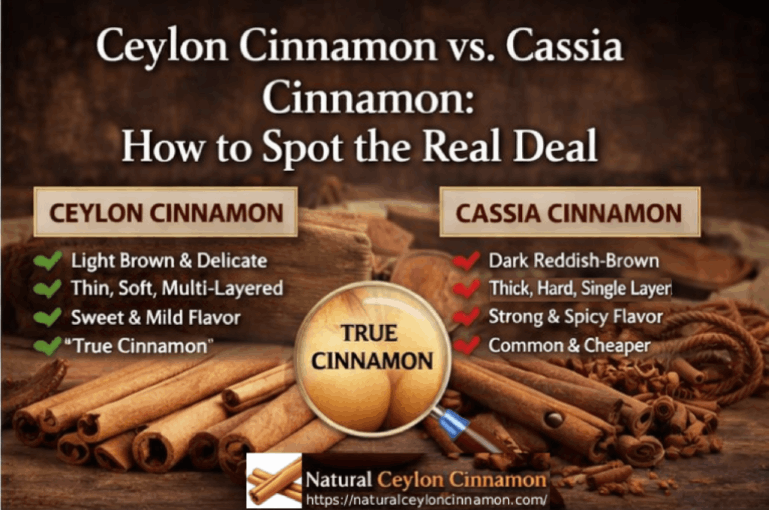
Cinnamon is one of the most beloved spices worldwide, prized for its warm aroma, sweet flavor, and health-promoting properties. However, not all cinnamon is created equal. Most supermarket cinnamon labeled simply as “cinnamon” is actually Cassia cinnamon, while the premium variety, Ceylon cinnamon, is often called “true cinnamon.” Knowing the difference between these two varieties is crucial—not only for taste but also for health, as Cassia contains higher amounts of coumarin, a compound that can be harmful in excess. This guide will help you identify authentic Ceylon Cinnamon, understand its benefits, and make informed purchasing choices.
What is Ceylon Cinnamon?
Ceylon Cinnamon (Cinnamomum verum) is a tropical evergreen tree native to Sri Lanka. Its thin, soft bark curls naturally into multiple-layered quills when dried. Ceylon Cinnamon is often lighter in color, with a delicate, sweet, and slightly citrusy aroma.
Unlike Cassia, Ceylon Cinnamon has very low coumarin content, making it safe for daily consumption even in higher amounts. For this reason, it is preferred in cooking, baking, and medicinal applications.
What is Cassia Cinnamon?
Cassia Cinnamon (Cinnamomum cassia or Cinnamomum aromaticum) is the most commonly sold cinnamon worldwide, especially in the United States and Europe. It is darker, harder, and thicker than Ceylon Cinnamon, often sold as a single-layer bark or pre-ground powder.
While Cassia cinnamon is cheaper and more widely available, it contains higher levels of coumarin, which may cause liver damage if consumed in large amounts over time. It also has a more pungent, bitter taste compared to the gentle sweetness of Ceylon Cinnamon.
Key Differences Between Ceylon and Cassia Cinnamon
Here’s a detailed comparison to help you identify the true cinnamon:
| Feature | Ceylon Cinnamon | Cassia Cinnamon |
|---|---|---|
| Origin | Sri Lanka | China, Indonesia, Vietnam |
| Bark | Thin, soft, easily broken | Thick, hard, difficult to break |
| Color | Light tan | Dark reddish-brown |
| Taste | Mild, sweet, delicate | Strong, spicy, bitter |
| Aroma | Subtle, complex | Pungent, sharp |
| Coumarin Content | Very low | High |
| Quill Structure | Multi-layered, soft curls | Single-layered, hard quill |
| Price | Higher | Lower |
Health Implications
Ceylon Cinnamon
- Safe for long-term consumption due to low coumarin
- Supports blood sugar regulation
- Rich in antioxidants and anti-inflammatory compounds
- Suitable for daily cooking and beverages
Cassia Cinnamon
- Contains higher coumarin, which can damage the liver if overconsumed
- Can still provide antioxidant benefits, but moderation is key
- Best used occasionally, not as a daily supplement
Choosing Ceylon Cinnamon ensures that you enjoy health benefits without the risks associated with high coumarin intake.
How to Identify Authentic Ceylon Cinnamon
- Look at the quills: Ceylon Cinnamon quills are thin, soft, and have multiple layers rolled together, resembling a cigar. Cassia quills are hard, thick, and usually a single layer.
- Check the color: True Ceylon Cinnamon is light tan or golden brown, while Cassia is dark reddish-brown.
- Snap test: Ceylon Cinnamon breaks easily when snapped, whereas Cassia is very tough.
- Aroma and taste: Ceylon Cinnamon is mild and sweet; Cassia is strong and pungent.
- Price and labeling: Authentic Ceylon Cinnamon is more expensive. Look for labels stating “Ceylon” or “Sri Lanka cinnamon.”
Ways to Use Ceylon Cinnamon
Ceylon Cinnamon’s delicate flavor and health benefits make it versatile:
- Beverages: Add to coffee, tea, or smoothies.
- Baking: Enhance cakes, cookies, and muffins.
- Cooking: Sprinkle on curries, rice dishes, and vegetables.
- Home remedies: Use in teas, honey mixtures, or skincare preparations.
Why Ceylon Cinnamon is Worth the Investment
Although it is more expensive than Cassia, the long-term benefits of Ceylon Cinnamon—low coumarin content, superior flavor, and health-promoting properties—make it a worthwhile investment. By choosing Ceylon Cinnamon, you not only enjoy premium taste but also protect your liver, support blood sugar management, and benefit from its antioxidant and anti-inflammatory effects.
Conclusion
Cinnamon is not just a spice; it’s a powerful natural ingredient that can enhance your health and culinary experiences. While Cassia Cinnamon is common and cheaper, it comes with higher coumarin levels and a more pungent taste. Ceylon Cinnamon, the “true cinnamon,” offers a delicate flavor, safer daily consumption, and a wide range of health benefits.
When buying cinnamon, always check for the origin, quill structure, aroma, and labeling. By choosing authentic Ceylon Cinnamon from Sri Lanka, you ensure that every sprinkle in your tea, dessert, or meal is both flavorful and beneficial for your health.
We hope you enjoyed the article.
Our dream is to share this natural wonder freely, to honor both the earth that provides it and the people who enjoy it. When you choose our cinnamon, you’re not just tasting a spice—you’re joining a circle of care: for yourself, for nature, and for the joy of giving freely.
Natural Ceylon Cinnamon is a Nature’s Gift, yours to Enjoy. Experience the taste of true Ceylon cinnamon today. Celebrate the nature. And feel the joy of sharing it with the world.
If you have any questions or need any help, leave a comment, do a Live Chat or contact us via our Contact Page, and we’ll be happy to help you.
Happy Ceylon Cinnamon!
Good Luck!